




Digestive capability begins with understanding the role of each part of a routine, not simply choosing the highest CFU number. A probiotic strain, a prebiotic substrate and a digestive enzyme do different jobs. Choosing deliberately means asking which microorganism is present, what human research actually studied and whether the full labeled formula fits your priorities. This guide makes those distinctions practical.
Key Takeaways
- Probiotic benefits depend on the microorganism and the outcome being studied.
- CFU measures viable microorganisms; higher counts do not automatically mean better benefits.
- Prebiotics such as inulin nourish selected gut microbes, while digestive enzymes break down food components.
- Clear ingredient identities, labeling and practical use matter when choosing a supplement.
What Are Probiotics?
Probiotics are live microorganisms that confer a health benefit when administered in adequate amounts. They include certain bacteria and yeasts studied in foods and supplements. The gut microbiome, the collection of microorganisms in the digestive tract, interacts with diet, metabolism and immune function. Some probiotic effects are shared across species, while others are strain-specific [1,2].
How Do Probiotics Work?
Depending on the microorganism, probiotics may interact with resident gut microbes, influence the local intestinal environment or produce metabolites. Effects can vary according to an individual's existing microbiota and the strain administered. This is why the complete name of a probiotic matters more than a broad statement such as 'contains beneficial bacteria' [1].
What Does Human Research Show About Gut Health?
Human probiotic research addresses a wide range of outcomes, from everyday bowel patterns to specific digestive circumstances. The strongest evidence comes from trials that identify the microorganism precisely, specify the amount and duration, and measure a defined outcome. That is why studies are most useful when read by strain and purpose [1].
Strain-specific research: a 2025 trial of L. acidophilus LA85
A 2025 randomized, double-blind, placebo-controlled clinical trial included 82 adults receiving amoxicillin. For 14 days, 41 participants received Lactobacillus acidophilus LA85 at 2 billion CFU per day and 41 received placebo [3]. Researchers measured antibiotic-associated diarrhea incidence, stool consistency, episode duration and gastrointestinal quality of life.
The LA85 group had diarrhea incidence of 4.9% versus 14.6% with placebo; the difference was not statistically significant in the full cohort (p=0.0615). Episode duration was also not significantly different (p=0.072). The investigators reported more consistent stool-form measurements and improved gastrointestinal quality-of-life scores. Age-subgroup results were exploratory and should not be treated as confirmation of an overall preventive effect [3].
This study is notable because it tested a specifically named strain in people, rather than probiotics as a broad category. It is not a trial of InnerGlow Logic or a demonstration that an everyday probiotic routine prevents antibiotic-associated complications.
What matters when evaluating the evidence
Trial participants, strain identity, amount, duration and the condition studied all help explain a result. For the LA85 trial, the authors were employed by the company holding rights to the strain [3]. Their affiliation is relevant research context; the study's measured outcomes should still be assessed on their own terms.
What Is a Probiotic Strain?
A probiotic name can include genus, species and strain. For example, Lactobacillus acidophilus identifies the species, while LA85 identifies a specific strain. Two supplements listing the same species might not contain an identical strain or have identical clinical evidence. This distinction makes strain identity a valuable label detail [1].
What Does CFU Mean?
CFU means colony-forming units: a measurement related to viable microorganisms. Probiotic products often use CFU counts in the millions or billions. Those figures help describe a preparation, but they do not rank supplements by effectiveness. According to NIH, a higher CFU count does not automatically provide greater health benefits [1,2].
Consider two labels: one lists a clearly identified strain and its viable count, while the other advertises a larger number without useful microorganism details. The first gives you more information for checking whether relevant human studies exist. Also read storage instructions and any statement about the viability period.
Why Prebiotics Matter for Gut Wellness
Prebiotics are substrates selectively used by host microorganisms in ways that confer a health benefit. Unlike probiotics, prebiotics are not themselves live bacteria. Inulin, a prebiotic fiber found in plants such as chicory and Jerusalem artichoke, is one well-studied example [4].
Human research on inulin
A 2025 randomized, double-blind crossover study assessed 39 adults with functional constipation using 12 grams of chicory inulin daily for four weeks [5]. Researchers evaluated stool frequency, abdominal symptoms, quality of life and the gut microbiota. They reported improvements in bowel habits and changes in the relative abundance of selected microbial groups, including bacteria associated with fermentation and short-chain-fatty-acid production.
The crossover design requires caution about possible carry-over effects between study periods. The tested 12-g/day inulin intervention was not InnerGlow Logic's 200-mg labeled serving; these findings cannot establish the effects of the finished formula [5]. Some investigators were employed by the inulin ingredient supplier, which is worth noting when interpreting the study.
What About Digestive Enzymes?
Digestive enzymes help break down components of food. Amylases participate in starch breakdown, proteases in protein breakdown and lipases in fat breakdown. Enzymes therefore play a different role from probiotic microorganisms and the fibers that selected microbes ferment. For a combination formula, inspect the enzyme complex and the rest of the ingredient list rather than assuming every combination has been clinically tested.
Probiotics vs Prebiotics vs Digestive Enzymes
| Type | What it provides | Primary role |
|---|---|---|
| Probiotics | Live microorganisms | Strain-specific gut interactions |
| Prebiotics | Substrates such as inulin | Nourish selected microorganisms |
| Digestive enzymes | Proteins such as amylase and lipase | Break down food components |
For a deeper ingredient comparison, read Probiotics vs Prebiotics: Differences, Human Evidence & Can You Take Them Together?.
How to Choose a Probiotic for Your Goals
Start by identifying what you want from a gut-wellness routine. A practical choice is easier when you evaluate what the product contains and what role each component is intended to play.
- Check the strain: look for genus, species and a specific strain designation when provided.
- Read CFU information intelligently: a clear, credible viable count is more useful than automatically chasing the largest number.
- Understand companion ingredients: prebiotic fibers supply substrates for microorganisms; enzyme complexes help with food breakdown.
- Review the full formula: check labeling, directions, storage requirements and ingredients relevant to your personal needs.
- Choose a realistic routine: a convenient format and consistent nutrition habits can make daily use simpler.
What Is a Synbiotic, and Does Every Combination Qualify?
A synbiotic is a defined combination of live microorganisms and substrates selectively utilized by host microorganisms that confers a health benefit. A formula containing both probiotics and prebiotics is not automatically a clinically established synbiotic merely because both ingredient categories appear together. Use the term only when the specific combination meets the scientific definition [6].
How Long Does a Probiotic Take to Work?
Trial durations vary by the strain and research objective, from days to multiple weeks or longer. There is no universal timeline that applies to every supplement or person. Follow the specific label directions and seek clinical evaluation when digestive symptoms persist.
How Probiotics Fit Into Everyday Wellness
A sustainable routine combines nutrition, appropriate hydration and sufficient dietary fiber. Fermented foods such as yogurt can be sources of live microorganisms, although not every fermented food automatically qualifies as a clinically validated probiotic. For another perspective on how gut function interacts with the body, explore The Gut-Brain Axis.
Safety and Practical Considerations
Some probiotics and fermentable fibers can cause gas or bloating. People with serious illness, substantial immune suppression or complex medical conditions should seek individualized advice before using live-microorganism products. Persistent abdominal pain, bloody stool, unexplained weight loss or prolonged diarrhea should be evaluated by a healthcare professional [2].
Frequently Asked Questions
Is a higher CFU count always better?
No. The strain and its evidence matter more than CFU count alone [1,2].
Can I use probiotics and prebiotics together?
They have different roles and are often combined in food or supplement routines. Individual tolerance and formulation matter.
Do digestive enzymes work like probiotics?
No. Enzymes help break down food components, while probiotics are live microorganisms.
Does apple cider vinegar count as a probiotic?
Fermentation does not by itself demonstrate that a product contains a named viable probiotic strain. Check the label [2].
What should I read on the supplement label?
Check strain details, other ingredients, serving directions, storage information and labeled CFUs.
How long should I take probiotics?
The useful duration depends on the intended goal and the evidence for the specific preparation. There is no single schedule for all products.
Putting the Evidence in Context
A better gut-health supplement decision begins with ingredient clarity and scientific relevance. Understand the probiotic strain, the role of prebiotic fiber and digestive enzymes, and select a format that fits a consistent wellness routine.
Explore Gut Wellness with IDRAK
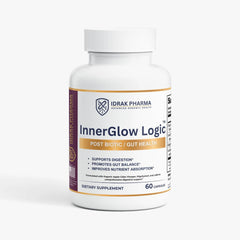
Read the formula by its labeled serving: InnerGlow Logic™ lists 1 billion CFU of Lactobacillus acidophilus LA85, 200 mg inulin, 100 mg DigeZyme®, and 1,000 mg organic apple cider vinegar powder in the two-capsule daily serving. A bottle contains 60 capsules, or 30 labeled servings. The 2025 LA85 research discussed above used 2 billion CFU daily, and the inulin trial used 12 grams daily; neither tested the finished InnerGlow Logic formula or its labeled amounts.
For a convenient combined formula, InnerGlow Logic™ brings together Lactobacillus acidophilus LA85, prebiotic inulin, organic apple cider vinegar powder and the DigeZyme® digestive enzyme complex in a daily capsule-based routine with a two-capsule labeled serving. Review the current label and Supplement Facts to see how it fits your priorities.
See related options in the Gut Health collection, or consider the Composed Presence System, combining InnerGlow Logic™, Dermalux™ and Zen Mode™ for a broader daily routine.
References
- [1] NIH ODS. Probiotics: Health Professional Fact Sheet.
- [2] NIH ODS. Probiotics: Consumer Fact Sheet.
- [3] Efficacy and Safety of Lactobacillus acidophilus LA85 in Preventing Antibiotic-Associated Diarrhea: A Randomized, Placebo-Controlled Study. 2025.
- [4] Gibson GR et al. ISAPP consensus statement on the definition and scope of prebiotics. 2017.
- [5] Puhlmann ML, et al. Inulin-induced improvements on bowel habit and gut microbiota in adults with functional constipation: findings of a randomized, double-blind, placebo-controlled study. BMC Gastroenterol. 2025.
- [6] Swanson KS, et al. The ISAPP consensus statement on the definition and scope of synbiotics. Nat Rev Gastroenterol Hepatol. 2020.
Educational information only. Supplements are not intended to diagnose, treat, cure or prevent disease.